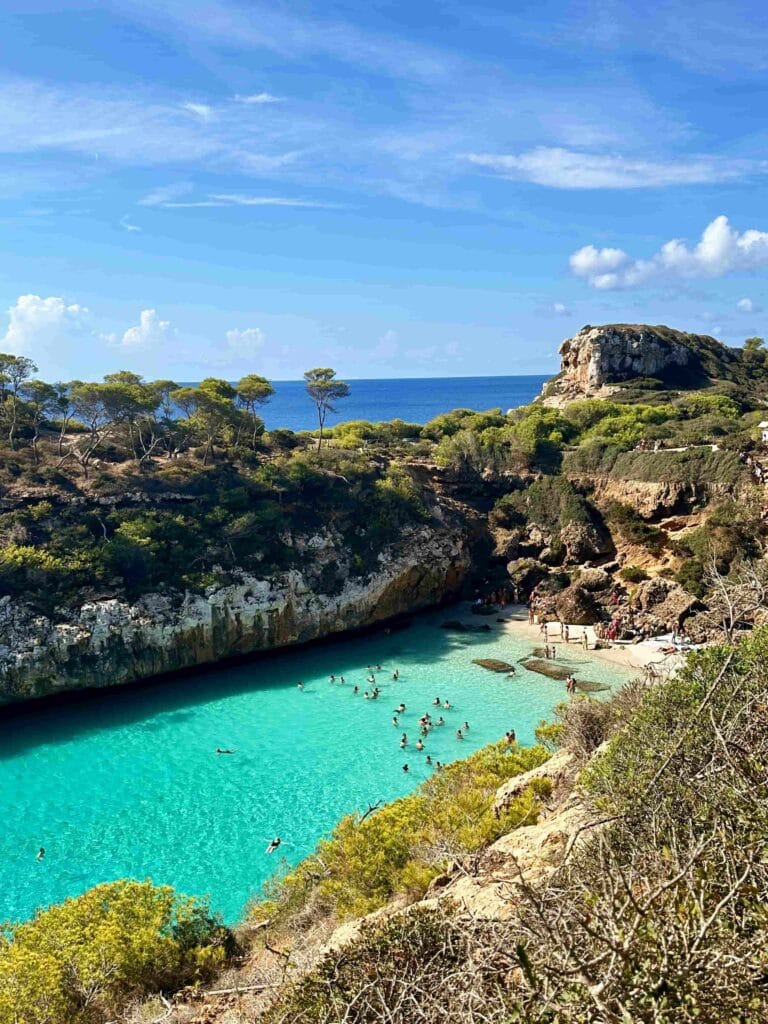
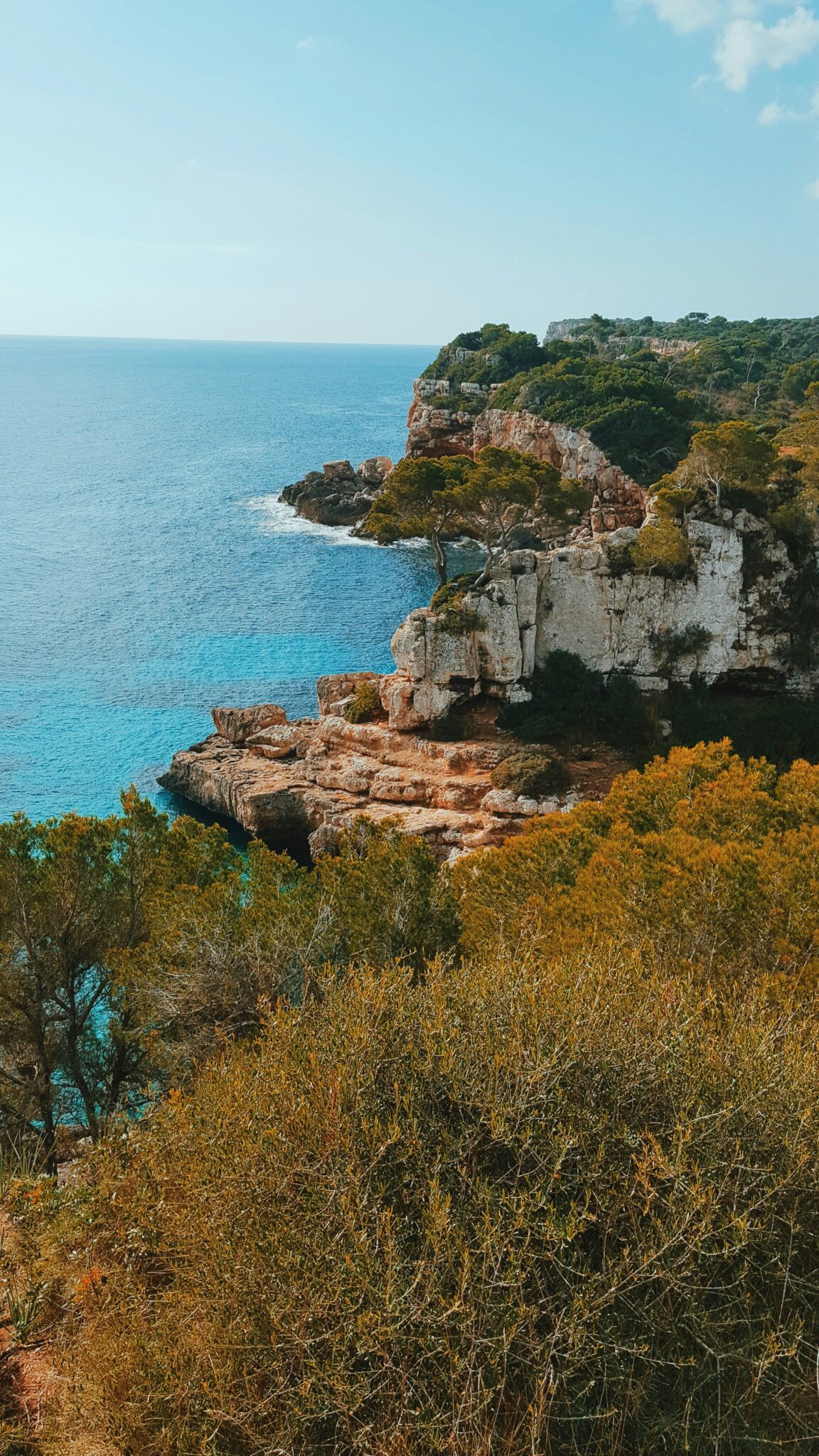
Mallorca’s east coast hides some of the Mediterranean’s most beautiful hidden coves — if you know where to look.
You’ve searched “Majorca holidays”, your partner searched “Mallorca beaches”, and somehow you’ve both ended up on different booking sites looking at the same island. Here’s the short answer: Majorca and Mallorca are exactly the same place. But knowing which part of that island to head to — that’s where the real planning begins.
This guide breaks down the Majorca Mallorca map area by area, with honest advice for couples who want more than a sunbed and a swim-up bar.
Majorca vs Mallorca — What’s the Difference?
Nothing, and everything.
The two names refer to the same island — the largest of Spain’s Balearic Islands, sitting in the western Mediterranean roughly 200km off the Spanish coast. Mallorca is the Catalan and Spanish spelling, and technically the correct one. Majorca is the anglicised version that British holidaymakers have used for decades.
You’ll see both names used on travel sites, in airports, and on menus. Neither is wrong. The island’s official name is Mallorca, but if you book a flight to Majorca you’ll land in exactly the same place: Palma de Mallorca Airport (PMI).
What does matter is which part of the island you’re visiting — because Mallorca is not one thing. The north is dramatic and rugged. The south is flat and package-holiday territory. The east hides some of the best hidden coves in the Mediterranean. And Palma, the capital, is a genuinely brilliant city that most couples underestimate entirely.
Map of Mallorca — Areas to Know
Before you book anything, get familiar with the Majorca Mallorca map. The island is roughly 100km across, and the difference between staying in the wrong area and the right one can make or break a couples trip.
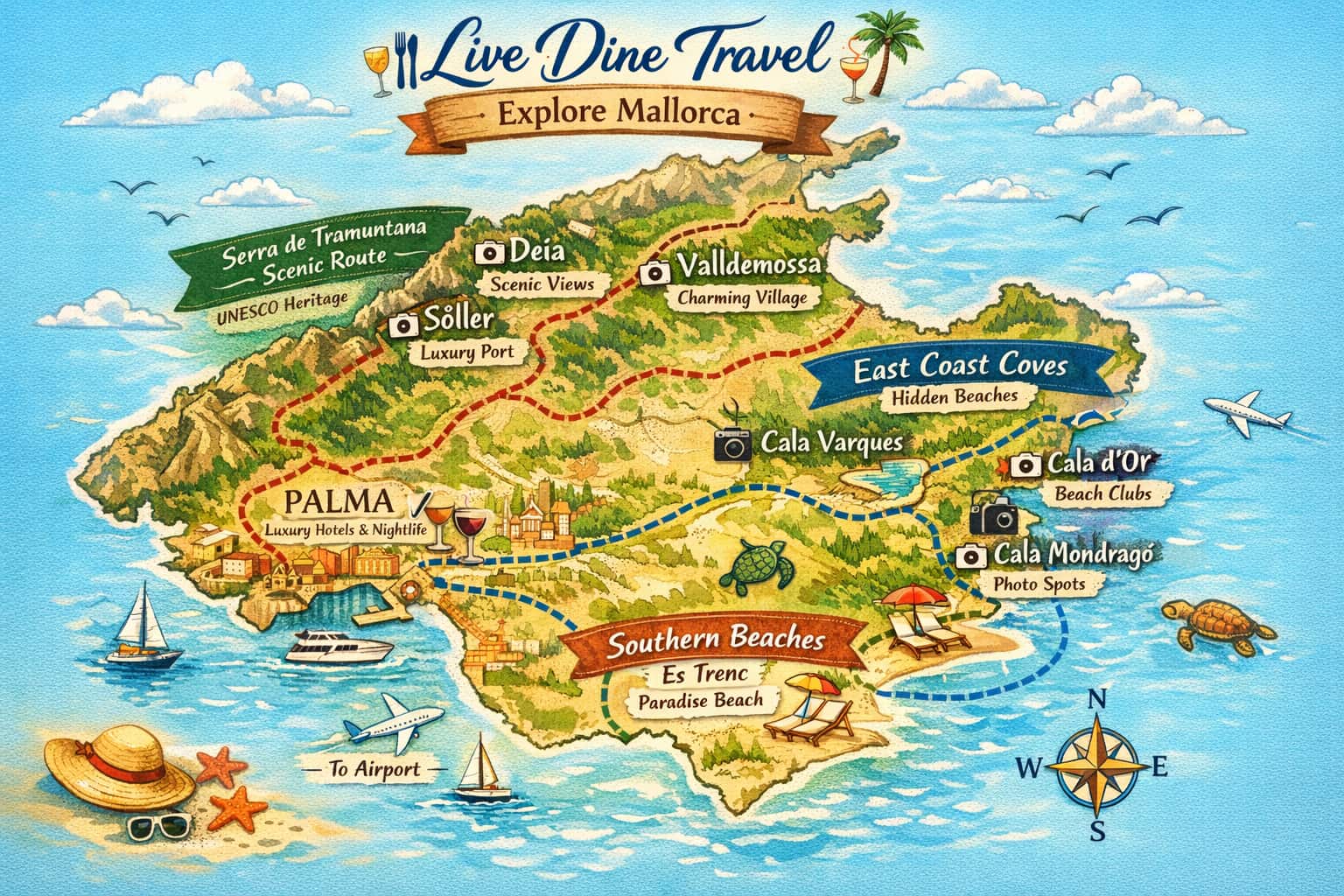
The Majorca Mallorca map broken down by area — north, south, east, west, and Palma.
Palma — The Capital
Palma is the city most couples sleep on, and they shouldn’t. The old town is genuinely beautiful — Gothic cathedral rising straight from the waterfront, narrow amber-lit streets, rooftop bars, and some of the best restaurants on the island. It’s a proper city with proper culture, and it’s nothing like the resort areas elsewhere on the island.
Couples verdict: Stay here for at least two nights. Walk the harbour at dusk, eat in the La Lonja neighbourhood, and visit the Cathedral (La Seu) in the morning light. It’s the best part of Mallorca for couples who want atmosphere over beach time.
Serra de Tramuntana — The Mountains
The mountain range that runs along Mallorca’s northwest coast is a UNESCO World Heritage Site, and it looks like it. Dramatic limestone peaks, ancient terraced olive groves, and pretty stone villages like Deià, Valldemossa, and Sóller. The north coast has sea cliffs rather than sandy beaches, and the roads are narrow and winding.
Couples verdict: This is the romantic heart of the island. Rent a car, drive the mountain roads slowly, stop for lunch in Deià, and take the vintage wooden train from Sóller down to the port. Don’t miss it.
East Coast — Coves and Caves
The east coast is where you find Mallorca’s most jaw-dropping hidden coves — Cala Mondragó, Cala Varques, Cala Llombards. The landscape is flatter here, the water clearer, and the crowds thinner once you get away from the main resorts.
Couples verdict: Best for couples who want beach time without the chaos of the south. Base yourselves near Porto Petro or Cala d’Or for easy access to the coves.
South Coast — Resorts and Busy Beaches
This is where the package holidays go. Magaluf, El Arenal, Playa de Palma — big hotels, long sandy beaches, and the kind of nightlife that suits stag dos more than romantic getaways. The beaches are genuinely good, but the atmosphere around them is not exactly intimate.
Couples verdict: Skip for a romantic trip unless you specifically want a lively beach scene. If you do stay south, choose Cala Pi or Es Trenc — they’re far better than the main resort strips.
Best Beaches in Mallorca for Couples
Mallorca has over 200 beaches. Here are the ones that actually deliver for couples — not the ones that show up on generic listicles.
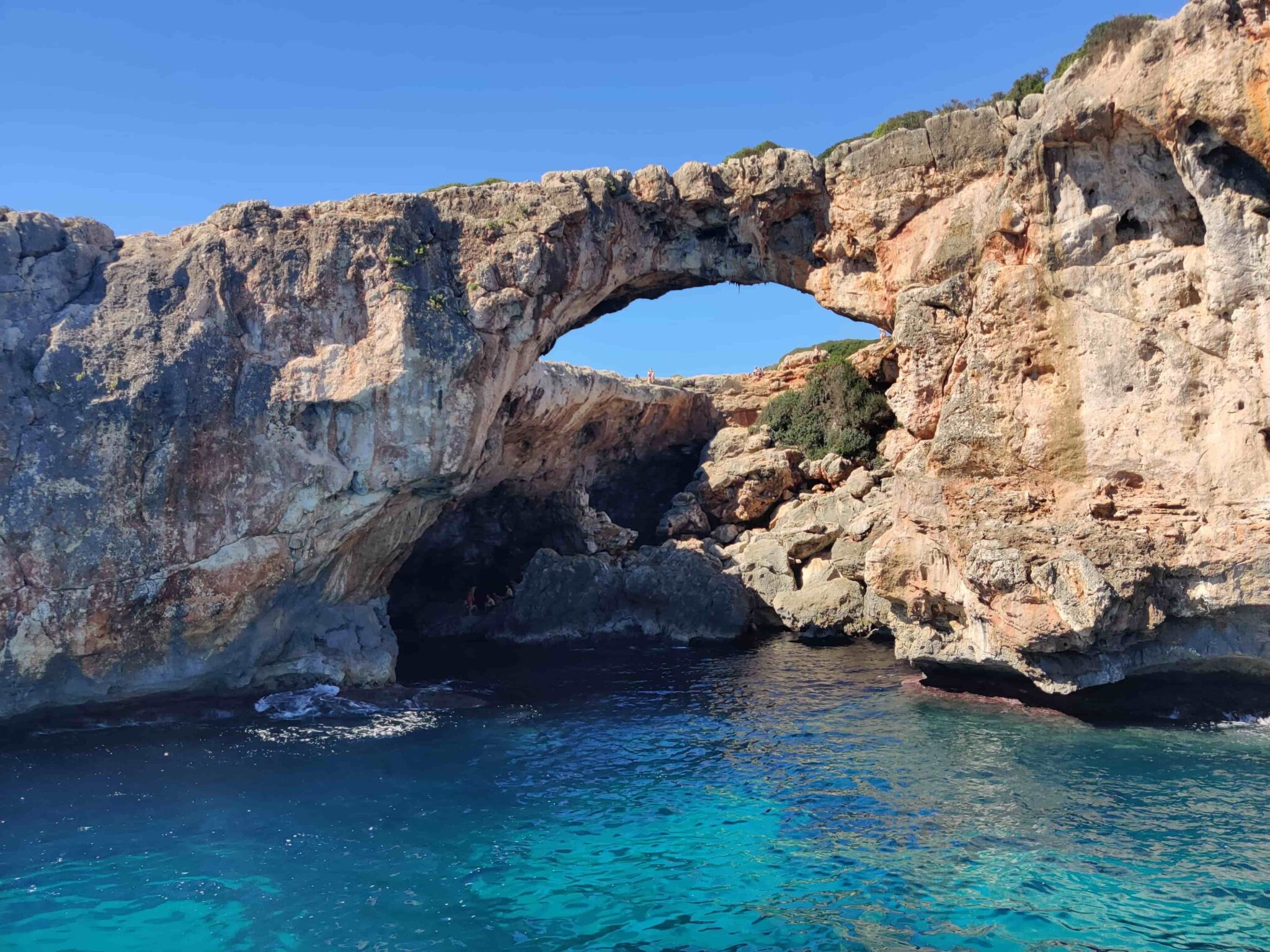
Cala Varques — accessible only on foot or by kayak, and all the better for it.
1. Cala Varques (East Coast)
A wild, unspoilt cove accessible only on foot or by kayak. No sun loungers, no beach bars — just white sand and water so clear it looks photoshopped. The 20-minute walk through pine forest to reach it keeps the crowds down.
2. Es Trenc (South Coast)
The exception to the south coast rule. Es Trenc is a long, natural beach backed by dunes and pine trees with none of the resort development that blights the rest of the southern shoreline. The water is shallow and the colour of the Caribbean.
3. Cala Llombards (Southeast)
A small, sheltered cove with calm turquoise water flanked by limestone cliffs. Easy to reach by car, with a small beach bar serving cold drinks. Not tiny enough to feel overcrowded, not big enough to feel like a resort beach.
4. Formentor Beach (North)
At the very tip of Mallorca’s northern peninsula, this long stretch of white sand is backed by pine-covered mountains and looks out over a deep blue bay. One of the most photographed beaches on the island for good reason.
5. Cala Deià (Northwest)
A tiny rocky cove at the foot of the mountains, a short walk from the village of Deià. More pebbles than sand, and swimming is off rocks and wooden platforms. The setting — mountains behind, deep blue Med in front — is extraordinary.
6. Cala Mondragó (Southeast)
Part of a natural park, Cala Mondragó is two connected coves with calm, clear water and a relaxed feel. Well-signposted, easy parking, and proper facilities — one of the most accessible beautiful beaches on the island.
Best Things to Do in Mallorca for Couples
The beaches are easy. Here’s what most couples miss.
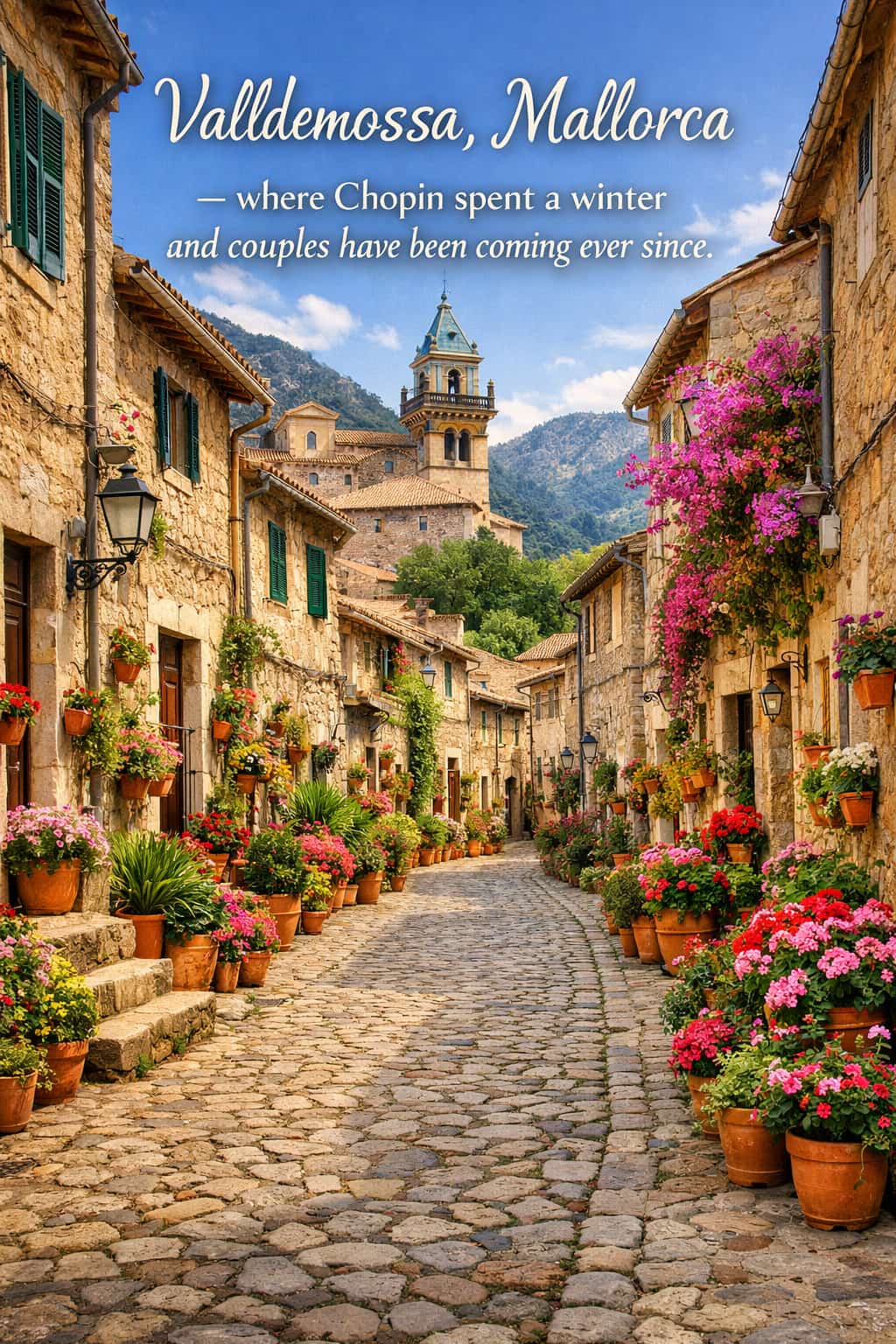
Valldemossa — where Chopin spent a winter and couples have been coming ever since.
Drive the Serra de Tramuntana
The mountain road from Andratx to Pollença (the Ma-10) is one of the best drives in Europe. Give it a full day, stop in every village that catches your eye, and pull over whenever the views demand it. Which will be often.
Take the Sóller Train and Tram
Mallorca’s vintage wooden train runs from Palma to Sóller through mountain tunnels and orange groves, then a tram takes you down to the port. It’s slow, beautiful, and entirely unlike anything else on the island. Buy tickets in advance in high season.
Explore Valldemossa and Deià
Two mountain villages, each worth a few hours. Valldemossa is where Chopin and George Sand famously spent a winter — the monastery where they stayed is open to visit. Deià is smaller, arty, and full of good restaurants. Both are exactly what you picture when someone says “Mallorcan village”.
Eat in La Lonja, Palma
Palma’s old fishing quarter has become the city’s best eating neighbourhood — tapas bars, wine bars, and restaurants spilling out onto stone squares. Spend an evening here, eat late (this is Spain), and walk back along the harbour afterwards.
Take a Boat Trip to Hidden Coves
Several operators run small-boat trips along the east and north coasts, stopping at coves that aren’t accessible by road. It’s the best way to reach the most secluded swimming spots. Book through your accommodation or at the port in Porto Cristo or Alcúdia.
Visit the Caves of Drach (Porto Cristo)
Enormous underground caves with an underground lake — a slightly surreal experience that’s genuinely impressive. There’s even a classical music concert performed by musicians in boats on the lake. Touristy, yes. Worth it, also yes.
Where to Stay in Mallorca for Couples

Palma’s old town has some of the most beautiful boutique hotels in the Balearics.
Palma Old Town — Best for City Culture
Small boutique hotels in converted historic buildings, walking distance to the cathedral and La Lonja. Perfect if you want to split your time between beach days and evenings in the city. Slightly pricier, but worth it for the atmosphere.
Deià or Sóller — Best for Romance
The northwest villages are where the island’s most atmospheric small hotels are — stone walls, mountain views, pools carved into terraces. Expensive, quiet, and genuinely beautiful. If budget allows, base yourselves here for the most romantic version of a Mallorca trip.
Porto Petro or Cala d’Or — Best for East Coast Beaches
Small, relatively low-key resorts with easy access to the best east coast coves. More relaxed than the south, with a decent selection of mid-range hotels and apartments. A good base for couples who want beach-first, culture-second.
Alcúdia — Best for North Coast Access
A well-preserved medieval walled town in the north with a good beach and easy access to Formentor. More local feel than the southern resorts, with a proper old town worth exploring. A solid all-rounder for couples who want variety.
Best Time to Visit Mallorca as a Couple
July and August are when the island is at maximum capacity — packed beaches, queues everywhere, and prices at their peak. Unless a buzzy atmosphere is what you’re after, avoid them.
The Sweet Spot: May, Early June & September
- Weather: 24–27°C, warm and sunny without the brutal heat of August
- Beaches: Quiet enough to actually enjoy — especially the hidden coves
- Sea temperature: Swimmable from May; at its warmest in September
- Prices: 30–40% lower than peak season hotel rates
- Restaurants: Open and unhurried — not slammed with tour groups
October is worth considering too, though some beach facilities close from mid-month. Palma and the mountain villages stay lively well into autumn, and the landscape is beautiful with the late light.
How to Get Around Mallorca
Car Hire (Recommended)
Car hire is the best option for most couples, especially if you want to reach the east coast coves and mountain villages. Book in advance in shoulder season — availability gets tight. Roads in the Tramuntana can be narrow and steep; take your time and enjoy them.
The Sóller Train
Covers the northwest beautifully and is an experience in itself. The vintage wooden train from Palma to Sóller is one of the most scenic rail journeys in Spain.
Buses
Connect the main resorts to Palma and to each other, but schedules are infrequent and journey times are long. Fine for a day trip to Palma; frustrating if you’re trying to reach specific beaches.
Boats and Water Taxis
Run along the east and north coasts in summer, connecting ports and coves. A genuinely good way to explore if you’re based on the coast — and often faster than driving.
Taxis
Readily available in Palma and the main resorts. Less predictable in rural areas. Bolt and MyTaxi both operate in Palma.
Frequently Asked Questions
Is Majorca the same as Mallorca?
Yes — completely. Majorca is the English spelling, Mallorca is the Spanish and Catalan spelling. They refer to the same island. You’ll see both used interchangeably on booking sites, at airports, and on the island itself.
Is Mallorca good for couples?
Very much so, particularly the northwest (Serra de Tramuntana mountains and villages), Palma old town, and the secluded east coast coves. Avoid the main southern package-holiday resorts if you’re after a romantic atmosphere.
What is the best area of Mallorca for couples?
Deià and Sóller in the northwest for the most romantic setting. Palma old town for culture and dining. The east coast (Porto Petro, Cala d’Or area) for beautiful beaches without resort crowds.
When is the best time to visit Mallorca as a couple?
May, early June, or September. You get warm weather, swimmable sea, quieter beaches, and prices that are 30–40% lower than July and August.
How many days do you need in Mallorca?
Seven days is ideal for a couple — enough time for two nights in Palma, a few days based near the mountains or east coast, a beach day or two, and a boat trip. Five days works if you stay in one area and don’t try to cover too much.
Ready to Start Planning?
Mallorca is one of those islands that reveals itself slowly. The first time, most couples stick to the coast and leave impressed but not overwhelmed. The second time, they head into the mountains, find the villages, discover Palma properly — and wonder why they didn’t do it that way from the start.
Start with the map, pick your base, and don’t try to cover everything. The best version of a Mallorca trip is unhurried.