We still talk about that first evening in Valletta. We’d found a little restaurant tucked into one of those sun-bleached limestone streets, ordered too much pasta, and watched the sun turn the harbour gold. Neither of us had planned to fall for Malta quite so hard — but here we are, two trips later, still recommending it to every couple who asks us where to go in Europe.
Malta doesn’t always make the shortlist. It gets overlooked for Santorini’s whitewashed drama, or Dubrovnik’s old town grandeur, or the obvious romance of Paris. And honestly? That’s part of what makes it so good. It’s small, it’s unhurried, it punches well above its weight for history and beauty — and it won’t obliterate your budget the way some of its Mediterranean neighbours will.
This is our Malta travel guide for couples — built from actual time spent there, not from press trips or hotel partnerships. We’ll cover when to go, where to stay, what to do, where to eat, how much to budget, and what we’d do differently if we were heading back tomorrow.
Quick note: This guide focuses on Malta island and Gozo. We’ve tried to keep it couples-focused throughout, but most of it applies to any pair of travellers exploring together.
Is Malta Good for Couples?
Short answer: yes — Malta is genuinely brilliant for couples. As this malta travel guide for couples will show, the real question is what kind of couple you are.
If you love history, architecture, good food, warm water, and being able to explore somewhere that doesn’t feel overrun — Malta is brilliant. The island has a density of incredible things per square kilometre that most destinations can’t match. In a single week, you can wander through a 16th-century capital, swim in a hidden sea cave, visit temples that predate the Pyramids, and eat some of the best fresh fish of your life.
If you need the Instagram backdrop of Santorini’s caldera, or the non-stop nightlife energy of Ibiza, Malta is probably not your first pick. It’s quieter than you might expect. The pace is slower. That, for us, is entirely the point.
Malta is especially well-suited to couples who:
- Want a mix of culture and beach without one dominating the whole trip
- Are travelling on a mid-range budget and want good value for the Mediterranean
- Enjoy exploring by foot and getting properly lost in a place
- Have four days to two weeks to spend — Malta rewards slowing down
One thing worth managing: Malta is small. The whole island is roughly 27km x 14km. You will see most of the main sites in a week. If you’re the type who needs a new destination every day to feel stimulated, one week might be enough. If you’re happy to revisit places and go deeper, you could easily fill ten days or more — especially if you add a few nights on Gozo.
Best Time to Visit Malta as a Couple
Malta has one of the most reliable climates in Europe (you can check real-time conditions on the Visit Malta weather guide), which is a big part of its appeal. Timing your trip is one of the most important decisions covered in any malta travel guide for couples. It’s essentially sunny and warm from April through October, with very little rain between June and September. But when you go makes a real difference to your experience.
Our recommendation: April–May or October
These shoulder months are the sweet spot. The weather is warm (22–26°C), the sea is swimmable by late May, the crowds are manageable, and prices are noticeably lower than peak summer. April in Malta is genuinely beautiful — the countryside is still green from winter rains, the light is soft, and you can walk around Valletta or Mdina without sweating through your clothes.
October is slightly cooler but the sea retains its summer warmth, making it arguably the best time to swim. We went in October once and the combination of quiet beaches and warm water was hard to beat.
What about summer (June–August)?
Peak season is busy and hot — Malta regularly hits 35°C+ in July and August. The main beaches get crowded, hotel prices spike, and Valletta can feel oppressive in the midday heat. That said, summer is when the Maltese social scene is at its most alive: outdoor festivals, late dinners, longer evenings. If you’re heat-tolerant and book well in advance, summer can work — just build in proper siesta time.
Winter (November–March)
The quietest and cheapest time to visit. Average temperatures are around 14–18°C — cool enough to need a jacket in the evenings, warm enough to walk around comfortably. The sea is too cold for most people to swim. But if your Malta trip is more about culture than beach, winter can be genuinely lovely: empty streets, low prices, and the kind of authentic daily life that disappears when summer tourists arrive.
Where to Stay in Malta: Our Picks for Couples
Where you base yourself will shape your whole trip. Malta is small enough that you can reach anywhere in under an hour, but staying in the right area makes evenings and morning walks much more enjoyable.
Valletta — best for couples who love culture and atmosphere
Valletta is Malta’s capital and it’s genuinely one of the most remarkable small cities in Europe. The whole thing is a UNESCO World Heritage Site — you’re staying inside a 16th-century fortified city. The streets are steep, the limestone buildings are golden, and at night the harbour views are extraordinary.
For couples, Valletta feels properly romantic. You can wander for hours without a plan and keep stumbling into beautiful things. The restaurant and bar scene has improved dramatically in recent years — there are now genuinely excellent places to eat and drink at a range of price points.
Accommodation tends towards boutique guesthouses and converted palazzos rather than big hotel chains. Expect to pay £80–£160/night for a decent mid-range option in high season, less in shoulder and winter months.
Sliema and St Julian’s — best for convenience and nightlife
These twin towns on the other side of Marsamxett Harbour from Valletta are Malta’s most modern, most commercial areas. They’re practical: good transport links, lots of restaurant and bar options, waterfront promenades, ferry connections to Valletta. They’re also less atmospheric than Valletta and feel more like any European resort town.
We’d suggest Sliema/St Julian’s if you’re planning to spend significant time at the beach or want to be closer to Paceville (Malta’s main nightlife strip). For couples primarily interested in culture and character, we’d choose Valletta every time.
Gozo — best for a romantic escape and slower pace
If your trip is long enough (a week or more), spending two or three nights on Gozo transforms the experience. Malta’s smaller, quieter sister island is everything that mainland Malta is not quite: rural, unhurried, genuinely peaceful. The landscapes are softer, the towns are smaller, and there are farmhouses and boutique places to stay that feel genuinely special.
Getting to Gozo requires a 25-minute ferry from Ċirkewwa in northern Malta — it’s easy and runs frequently. We’d recommend Gozo especially for couples who want that ‘discovered somewhere’ feeling.
For a deeper dive into Malta’s history and culture, read our detailed post: Malta: Where Ancient History Meets Azure Waters. It pairs well with this guide.
Top Things to Do in Malta for Couples
This is where Malta really earns its reputation. For a place this small, the range of experiences is remarkable. Below are the things we’d prioritise — and what any good malta travel guide for couples should cover.
Walk Valletta Together — Properly
We don’t mean the main tourist drag. We mean getting properly lost in the quieter residential streets, finding the city’s many small bastions and lookout points, walking the Lower Barrakka and Upper Barrakka Gardens at golden hour, and watching the traditional luzzu fishing boats bobbing in the Grand Harbour. Valletta is best explored slowly, on foot, without a schedule.
Don’t miss: St John’s Co-Cathedral (genuinely breathtaking inside), the Grand Master’s Palace, and a coffee at one of the tiny pavement cafés on Merchants Street.
Day Trip to Gozo and Comino
The Blue Lagoon between Malta and Comino is one of those places that genuinely looks like the photos. Shallow, impossibly turquoise water, white sandy patches, limestone cliffs. It gets extremely crowded in summer — go early or in shoulder season if you want any sense of it being yours. A combined Gozo-Comino day trip by boat is one of the classic Malta experiences for a reason.
Visit the Megalithic Temples
This one surprises most people. Malta is home to some of the oldest freestanding structures on Earth — the Ggantija Temples on Gozo and Hagar Qim on Malta predate Stonehenge by over a thousand years. They’re genuinely awe-inspiring and, unlike many of Europe’s ancient sites, not yet overwhelmed by tourists. Standing there together and trying to comprehend 5,500 years of history is one of those quiet, affecting travel moments we both still remember.
Swim at St Peter’s Pool or Golden Bay
St Peter’s Pool near Marsaxlokk is one of Malta’s natural swimming spots — a rocky, enclosed sea pool with clear blue water and no beach infrastructure. It’s exactly the kind of place you feel like you’ve discovered even when it’s on Google Maps. Golden Bay is Malta’s most popular sandy beach and deservedly so: proper soft sand, decent facilities, and pretty sunset views.
Mdina at Golden Hour
Mdina — Malta’s ancient walled city and former capital — is best visited in late afternoon when the day-trippers leave. The narrow limestone streets empty out, the light turns amber, and the place takes on a genuinely medieval quality that’s hard to describe. Wandering Mdina with someone you love as the sun goes down is one of the most romantic things we’ve done in Europe, and we say that without any embarrassment.
Grand Harbour Boat Trip
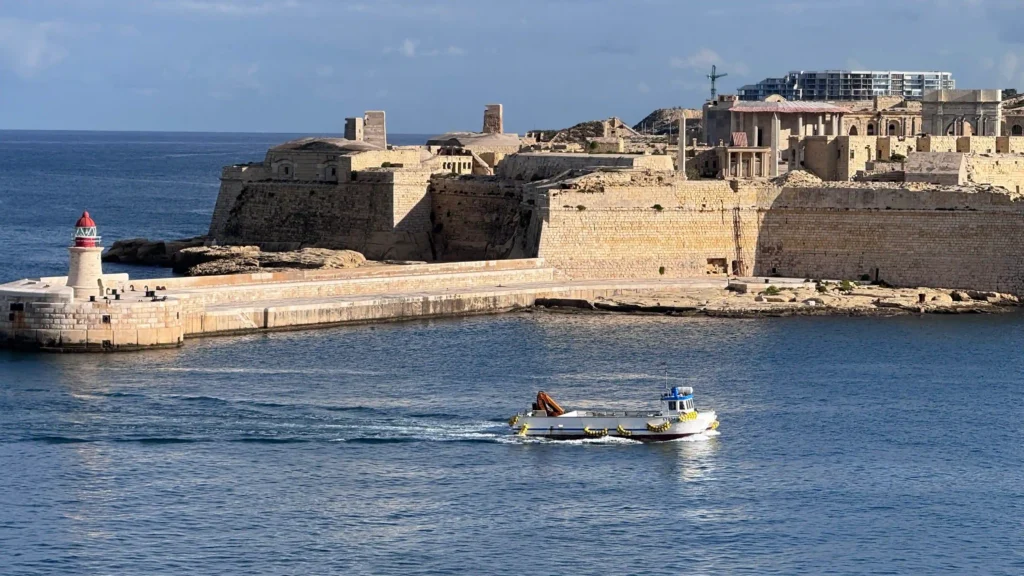
The Grand Harbour is one of the great natural harbours of the world and it’s best understood from the water. Traditional dgħajsa (water taxi) trips run from the Three Cities waterfront, and longer harbour cruise options are available from Valletta. The perspectives from the water — looking up at the massive fortifications — are something you can’t replicate from land.
Where to Eat in Malta: Food We Loved
Maltese food is underrated. It sits somewhere between Italian, North African, and British (a legacy of 150 years of British rule) — lots of fresh seafood, hearty pasta dishes, rabbit (fenek), and pastizzi: the ubiquitous flaky pastry parcels filled with ricotta or mushy peas that you’ll find at every bakery for around 30–50c each.
What to eat
Pastizzi are non-negotiable — cheap, warm, and addictive. Try fresh fish at one of the restaurants around Marsaxlokk harbour on Sunday mornings when the market is running. Order bragioli (beef olives) or rabbit stew if you want something properly Maltese. The local Cisk lager is good and cheap. For something sweet, imqaret (deep-fried date pastries) are worth seeking out.
Where to eat in Valletta
Valletta has Malta’s best dining scene. The area around Strait Street has transformed in recent years into a genuinely good strip of restaurants and bars with outdoor tables. Look for places with handwritten menus, short wine lists, and genuinely local clientele — they’re the reliable ones. Expect to pay €30–€50 for two with drinks at a decent mid-range restaurant.
Budget eating tips for couples
Pastizzi and ħobż biż-żejt (Maltese bread with oil and tomatoes) from local bakeries will keep your lunch costs minimal. Most good restaurants offer lunch specials that are significantly cheaper than the evening menu. Supermarkets in Sliema and Valletta are well-stocked if you want to self-cater occasionally.
Getting Around Malta as a Couple
Public buses
Malta has a comprehensive public bus network that covers most of the island. It’s cheap (€2 per journey, day passes available) but slow and can be crowded in summer. For getting between Valletta and Sliema or St Julian’s, buses are perfectly fine. For remote beaches or reaching places on your own schedule, they’re frustrating.
Renting a car
For couples, renting a car is the single thing that transforms a Malta trip. The island is small enough that you can drive from one end to the other in under an hour, and having a car means you can reach less-visited spots without timing your day around bus schedules. Cars are cheap to hire — expect €30–€50/day for a small car in shoulder season, more in peak summer. Note: Maltese drive on the left (a British legacy) and the roads can be narrow and chaotic, but it’s entirely manageable.
Taxis and Bolt
Bolt (ride-hailing app) works well in Malta and is cheaper than metered taxis for most trips. It’s our go-to for evenings when neither of us wants to navigate or find parking.
Ferry to Gozo
The Gozo Channel ferry runs from Ċirkewwa (northern Malta) to Mġarr harbour on Gozo. Crossing takes 25 minutes and ferries run approximately every 45–60 minutes. As a foot passenger (no car), fares are minimal and you just turn up. If you want to take a hire car, book in advance during summer.
Malta Budget Breakdown for Couples
Malta is genuinely one of the more affordable Mediterranean destinations. For up-to-date entry requirements and travel advisories, check the UK Government Malta travel advice page before you book.
Malta is genuinely good value compared to other Mediterranean destinations. Below is a realistic breakdown based on our own trips, covering three different budget levels for two people per day.
| Category | Budget (€/day for 2) | Mid-Range (€/day for 2) | Comfortable (€/day for 2) |
|---|---|---|---|
| Accommodation | €50–70 (hostel/budget guesthouse) | €90–140 (mid boutique hotel) | €150–250 (boutique palazzo/resort) |
| Food & Drink | €25–35 (self-cater lunches, local restaurants) | €50–70 (restaurant most meals) | €80–120 (nicer restaurants, wine) |
| Transport | €10–15 (buses + occasional taxi) | €30–40 (hire car) | €40–60 (hire car + comfort taxis) |
| Activities | €10–20 (mostly free sights, 1 paid entry) | €25–40 (boat trip, temple entry) | €50–80 (private tours, premium experiences) |
| Total per day (2 people) | €95–140 | €195–290 | €320–510 |
| Total per week (2 people) | €665–980 | €1,365–2,030 | €2,240–3,570 |
Our honest spend: On our most recent Malta trip (7 nights, October), we spent approximately €1,600 for two — including flights from the UK. That included hiring a car for 4 days, eating out every evening, one boat trip, and staying in a mid-range boutique guesthouse in Valletta.
Our Suggested Malta Itinerary for Couples
This is the section of any malta travel guide for couples where we have to stress: don’t over-schedule. Malta is small enough that you can be flexible without stressing.
5 Days in Malta — The Essential Couples Trip
Day 1: Arrive & settle into Valletta: Check in, walk the harbour at sunset, dinner on Strait Street. Low-key arrival — don’t try to cram in sightseeing.
Day 2: Valletta in depth: St John’s Co-Cathedral, Upper Barrakka Gardens, wander the residential streets, lunch at a local café. Evening: aperitivo on the waterfront.
Day 3: Mdina, Rabat & the interior: Drive (or bus) to Mdina in the morning before crowds arrive. Walk the city walls. Lunch in Rabat. Afternoon: Hagar Qim temples. Back to Valletta for dinner.
Day 4: South coast — Marsaxlokk & swimming: Sunday market at Marsaxlokk harbour (or any morning for fish restaurants). Afternoon: St Peter’s Pool for swimming. Easy evening.
Day 5: Gozo day trip: Early ferry to Gozo — rent a car on island or join a tour. Azure Window site, Ggantija Temples, lunch in Victoria. Optional Comino/Blue Lagoon stop on the return ferry.
7 Days — Extended Version with Gozo Overnight
Add two nights on Gozo after your Valletta base. This transforms the Gozo experience — instead of a rushed day trip, you wake up there, explore at your own pace, and get the island at its quietest (early morning and evening). Take the ferry back on Day 6, spend Day 7 doing anything you missed in Malta.
Long Weekend (3 Days) — Condensed Must-Sees
Day 1: Arrive, Valletta walk and dinner. Day 2: St John’s Cathedral, Mdina, Hagar Qim, St Peter’s Pool. Day 3: Morning in Valletta, afternoon Comino boat trip (book in advance), evening departure. It’s tight but covers the essential experience.
Practical Malta Travel Tips
No malta travel guide for couples is complete without the practical logistics. Here’s what actually matters before you travel.
Getting there
Malta is well-connected from most UK and European airports — Ryanair and easyJet both fly there regularly. Flight time from London is approximately 3 hours. Air Malta (the national carrier) has been through difficulties but continues to operate. We’d book early for summer and check both direct and one-stop options.
Currency, language, and money
Malta uses the euro. English is an official language alongside Maltese — you’ll have no language barrier anywhere. ATMs are plentiful; most restaurants and shops accept cards. We’d still carry a small amount of cash for pastizzi bakeries, market stalls, and older local restaurants.
SIM cards and internet
If you’re coming from the UK, note that post-Brexit roaming charges may apply depending on your network. Check before you go. Local SIM cards from GO or Epic are cheap and easy to buy at the airport or any phone shop.
Safety
Malta is one of the safer Mediterranean destinations. Petty crime exists in busier tourist areas (standard bag-watch precautions apply) but we’ve never felt unsafe there at any hour. The Maltese are generally warm and welcoming to tourists.
What we’d do differently
We’d spend more time on Gozo — one overnight isn’t enough. We’d also visit Mdina on a weekday rather than a weekend when it gets busier. And we’d book St John’s Co-Cathedral tickets in advance in summer — the queues can be long.
For more on exploring specific areas, check out our Ultimate Malta Travel Guide covering Valletta, Gozo and hidden gems — it’s a great companion to this malta travel guide for couples.
FAQ: Malta for Couples
Is Malta a good holiday destination for couples?
Yes — we think it’s one of the most underrated couples destinations in Europe. It has history, beautiful landscapes, excellent food, warm water, and a pace of life that encourages you to slow down and actually be present with each other. It lacks the obvious glamour of Santorini or the Amalfi Coast, but for couples who want substance over Instagram, it consistently delivers.
How many days do you need in Malta?
We’d say a minimum of five full days to cover the highlights comfortably — Valletta, Mdina, the south coast, and a day on Gozo. Seven to eight days lets you breathe, revisit favourite spots, and add a proper Gozo overnight. A long weekend (three to four days) is possible but will feel rushed.
Is Malta expensive compared to other Mediterranean destinations?
No — Malta is good value relative to most comparable Mediterranean destinations. It’s cheaper than Greece’s popular islands, significantly cheaper than the Amalfi Coast or Sardinia, and on par with Croatia’s mid-range areas. Mid-range couples should budget around €200–€250 per day for accommodation, food, transport, and activities. You can do it for less if you’re budget-conscious.
What is the best area to stay in Malta for couples?
Valletta is our first choice for atmosphere, romance, and being genuinely in the heart of things. It’s walkable, historic, and has the best restaurant scene. Gozo is our second choice for couples wanting peace and rural beauty, particularly for an overnight stay. Sliema and St Julian’s are more practical but less characterful.
Is Malta safe for tourists?
Yes. Malta consistently ranks as one of Europe’s safest destinations. The usual common-sense precautions apply in busy tourist areas — be aware of pickpockets in crowds, don’t leave valuables visible in hire cars — but serious crime affecting tourists is rare. We’ve walked around Valletta late at night without any concerns.
Can you do Malta on a budget as a couple?
Absolutely. Many of Malta’s best experiences are free — the city streets of Valletta and Mdina, the coastline walks, the village festas. Accommodation is cheaper in the shoulder and winter months. Eating pastizzi and ħobż biż-żejt from bakeries keeps lunch costs very low. If you’re budget-conscious, you can have an excellent week in Malta for well under €1,000 for two, not including flights.
What is the Blue Lagoon and is it worth the hype?
The Blue Lagoon is a shallow bay between the islands of Comino and Cominotto — famous for its impossibly clear, turquoise water. It absolutely is beautiful and worth seeing at least once. The caveat: in peak summer (July–August), it gets extremely crowded with day-tripper boats. We’d recommend going in May, June, or September/October, or taking an early morning boat when the crowds are thinner.
Final Thoughts: Why We Keep Recommending Malta
Malta keeps surprising us as one of Europe’s best destinations for couples. As a malta travel guide for couples written after two real trips, Every time we recommend it to a couple who’s slightly sceptical — who wondered if it was too small, too overlooked, too far off the beaten path — they come back saying it was one of their favourite trips. There’s something about being somewhere that feels genuinely discovered, genuinely yours, that makes a place stick.
It’s not perfect. The traffic is chaotic. The summer heat can be suffocating. Parts of St Julian’s feel like any generic European resort. But Valletta at golden hour, Mdina after the tourists leave, Gozo on a quiet morning, the Blue Lagoon in early June — these are the things we still talk about. We think you’ll feel the same.
If you have questions about anything in this guide, or want more specific advice for your particular trip, drop a comment below — we read everything and try to reply to all of them.